

Video Localisation and Multilingual EditingPost-Production in the Languages Your Audience Speaks.
Subtitles. Captions. Translated graphics. Checked by people.
Film Me provides video localisation for organisations that communicate across languages: subtitles, captions, translated on-screen text and graphics, and multilingual versions of corporate films. Film Me has worked in English, Japanese, Arabic, French, Vietnamese, Indonesian and many other languages, and every translation is checked by a person who can read it.
Definition
Video localisation is adapting a video for another language or market: translated subtitles or captions, translated on-screen text and graphics, and sometimes voice-over, while keeping the meaning, tone and brand of the original.
Multilingual as standard
Film Me has worked across languages since 2008.
Film Me started in Dubai, making corporate films for clients across the Middle East, and has since filmed in over 30 countries.
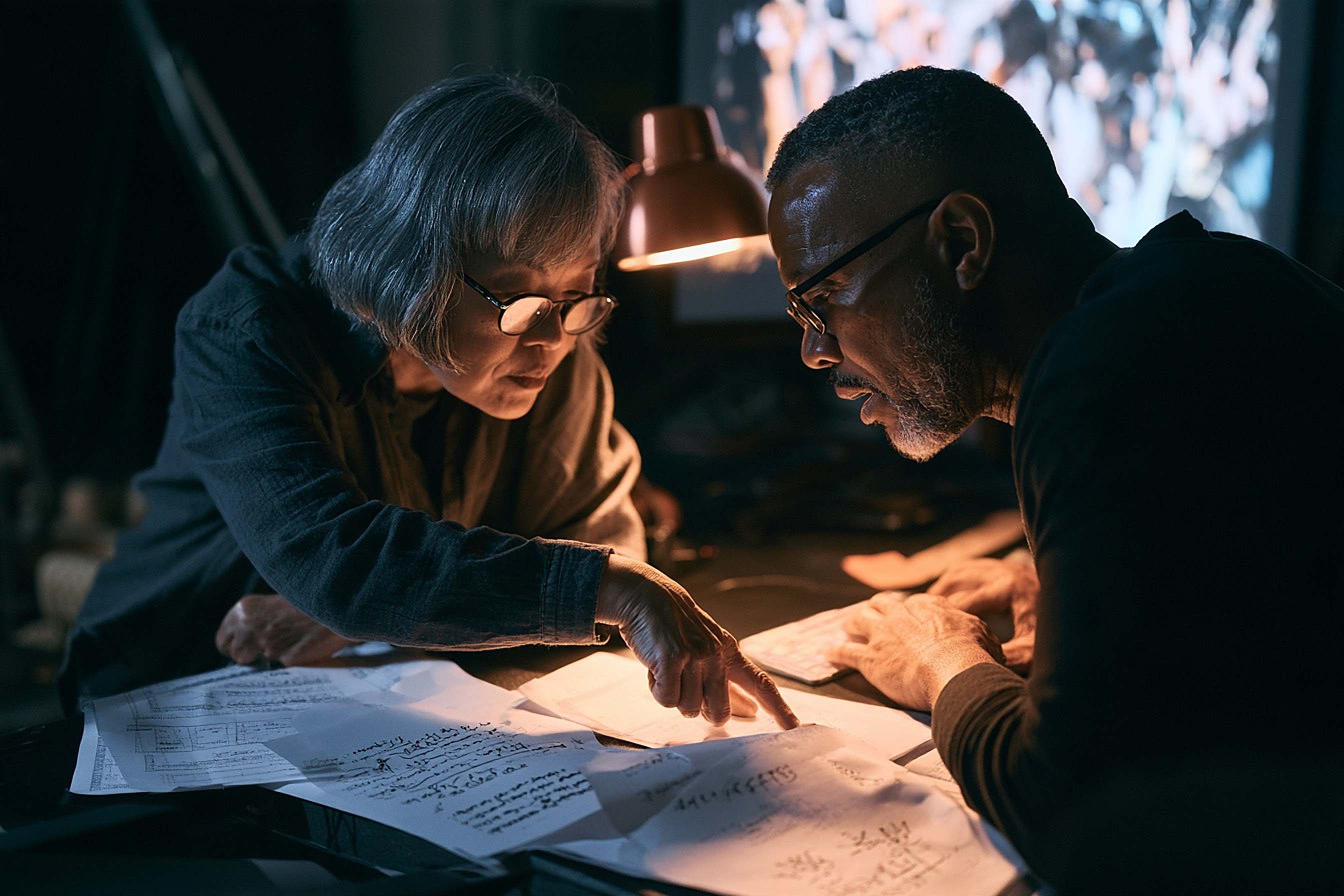
Most of those clients needed their films in more than one language. Working in Arabic and English side by side, then Japanese, French, Vietnamese and Indonesian, is where Film Me learned what localisation needs: someone who can read the script on the screen.
What video localisation includes
More than subtitles.
| Element | What Film Me does | What goes wrong without care |
|---|---|---|
| Subtitles and captions | Translated, timed and checked; burned in or supplied as SRT or VTT files | Mistimed lines, mistranslated names, text too fast to read |
| On-screen text and graphics | Titles, lower thirds and charts rebuilt in each language | Translated speech over untranslated graphics |
| Text expansion | Layouts adjusted where a language runs longer than English | Text overflowing or shrinking to an unreadable size |
| Right-to-left and non-Latin scripts | Correct fonts, direction and line breaking for Arabic, Japanese and others | Reversed text, broken letter joins, wrong fonts |
| Names and terminology | Agreed glossary for names, titles, products and brand terms | The chief executive’s name spelled three ways |
| Versions | Each language delivered in every ratio and duration you need | Languages multiplied by versions, with no tracking |
AI translation and human checking
AI drafts the translation. A person who reads the language checks it.
AI augments. It does not replace.
AI translation has made localisation faster and more affordable, and Film Me uses it. It is a first draft, not a finished translation. It gets names and job titles wrong, mistranslates product terms, and misses tone. A human check is the difference between a subtitle that is roughly right and one your regional office is happy to publish.
How Film Me uses AI| AI helps with | People decide |
|---|---|
| Transcribing the original speech | What was actually said, and what was meant |
| First-draft translation | Names, titles, product terms and tone |
| First-pass caption timing | Line breaks and reading speed |
| Generating caption files | Whether each language version is ready to publish |
How a localisation project runs
Agree the words first. Then build every version.
Lock The Master
The original-language film is approved first. Changes after translation multiply across every language.
Agree A Glossary
Names, job titles, product and brand terms are agreed once per language, with your regional teams if you have them.
Translate And Check
AI produces the draft. A person who reads the language checks and corrects it. You approve the text before it goes on screen.
Build, Check, Deliver
Captions and graphics are built for each language and ratio, checked against The Film Me Finish, and delivered with clear file names.
Questions about video localisation
Localisation, answered.
What is video localisation?
Video localisation is adapting a video for another language or market: translated subtitles or captions, translated on-screen text and graphics, and where needed a translated voice-over, while keeping the meaning, tone and brand of the original.
Which languages does Film Me work in?
Film Me has produced video in English, Japanese, Arabic, French, Vietnamese, Indonesian and many other languages, including right-to-left and non-Latin scripts.
Do you use AI translation?
As a first draft, yes. AI translation is fast and often good, but it makes mistakes with names, job titles, product terms and tone. At Film Me every translated caption and graphic is checked by a person who can read the language before it is delivered.
What is the difference between subtitles, open captions and closed captions?
Subtitles translate speech for viewers who do not know the language. Captions also describe relevant sounds, for viewers who cannot hear the audio. Open captions are burned into the picture and always visible. Closed captions are a separate file the viewer can switch on or off.
Can you supply caption files for our platform?
Yes. Film Me supplies caption files in the common formats, such as SRT and VTT, named to match each video, as well as burned-in versions where you need them.
Can you localise a film you did not make?
Yes. A finished master works for subtitles and captions. For translated on-screen text and graphics, the original project files or clean, text-free footage give the best result.
Related Film Me services
Large-Scale Video Editing
Programmes of ten to several hundred videos, edited to one standard.
Training Video Editing
Course and eLearning libraries that look and sound like one series.
Video Versioning
Cutdowns, aspect ratios and variants from one approved master.
White-Label for Agencies
Overflow editing under your brand.
Start a Conversation
More Than One Language?
Tell us which languages, how many films and which platforms. Film Me will plan the versions and the checking.